

Winter in Rhode Island is very beautiful, but it can also be very cold. The cold weather brings snow and ice that we all see outside our windows. But the cold air can also hurt the inside of your house if you are not careful. One of the biggest problems homeowners face is frozen pipes. When the water inside your pipes freezes, it can cause big trouble for your family. If you do not fix it fast, you might end up with broken pipes and water everywhere. Cleanworks is here to help you understand this problem and fix it quickly. We want to keep your home safe and warm all winter long.
Why Pipes Freeze in Rhode Island
Rhode Island gets very cold in the winter months, like January and February. When the temperature outside goes down, the pipes in your house get cold too. If the pipes get too cold, the water inside them turns into ice. We all know that water gets bigger when it freezes into ice. This ice pushes hard against the metal or plastic of your pipes. If the ice pushes too hard, the pipe cannot hold it anymore. This pressure is the main reason why you get frozen pipes in your home. It happens mostly when the heat is not on, or it is very windy outside.
Common Places Where Pipes Freeze
Some pipes in your house are more likely to freeze than others. You should check pipes that are in unheated areas first.
- Pipes that run through your attic or your basement.
- Pipes that are in your garage or on outside walls.
- Pipes that are under your kitchen or bathroom sinks.
- Pipes that go to outdoor hoses or swimming pools.
- Any pipe that does not have insulation around it.
- Pipes in crawl spaces that get cold wind.
These places get colder than the rest of your rooms. The warm air from your heater does not always reach these spots well. That makes them the perfect place for ice to form inside the plumbing. You need to watch these areas closely when the weather report says it will be freezing.

Signs You Might Have Frozen Pipes
It is not always easy to see if a pipe is frozen right away. One big sign is when you turn on the faucet, and no water comes out. You might only see a small drip instead of a strong stream of water. Another sign is if you see frost on the outside of your pipes. The pipe might also look like it is bulging or has a strange shape. Sometimes, you might smell something bad coming from the drain. This happens because the ice blocks the smells from going away. If you see any of these things, you need to act very fast.

What To Do If Your Pipes Are Frozen
If you think your pipes are frozen, you should not wait to do something. First, you should keep the faucet open even if water is not running. As the ice melts, the water will need a place to go. You can try to warm up the frozen part of the pipe gently. You can use a hair dryer or a portable space heater to do this. Do not use an open flame like a torch because that is very dangerous. Start warming the pipe near the faucet and work your way back. If you cannot find the frozen spot, you might need to call a plumber.
The Danger of Broken Pipes
The scariest part about frozen pipes is that they can turn into broken pipes. When the ice expands, it can crack the pipe wide open. When the ice melts, water will rush out of that crack very fast. This can flood your basement, your kitchen, or your bathroom in just a few minutes. Water damage ruins your floors, your walls, and your furniture. It can also lead to mold growing in your house, which is bad for your health. Broken pipes cost a lot of money to fix if you ignore them. That is why preventing the break is the most important thing you can do.
How to Prevent Frozen Pipes in the Future
There are easy ways to stop your pipes from freezing this winter. You can add insulation to the pipes in your attic and basement.
- Keep your garage doors closed to keep heat inside.
- Let cold water drip from the faucet when it is very cold.
- Keep the thermostat at the same temperature during the day and night.
- Open kitchen cabinet doors to let warm air reach the pipes.
- Seal up any cracks or holes near your pipes.
- Disconnect your garden hoses from the outside faucets.
Taking these small steps can save you a lot of trouble later. You do not want to wake up to a flooded house. A little bit of work now keeps your Rhode Island home safe.
Why You Need Professional Help
Sometimes the job is too big for you to handle on your own. If a pipe bursts, there is too much water for a mop and bucket. You need special tools to get all the water out of your home. If you leave water in the walls, it will cause rot and structural damage. Professional cleaners know how to dry out your house completely. They can also find water that is hiding under the floors. This helps make sure that mold does not start to grow later. It is always safer to call an expert when you have big water damage.
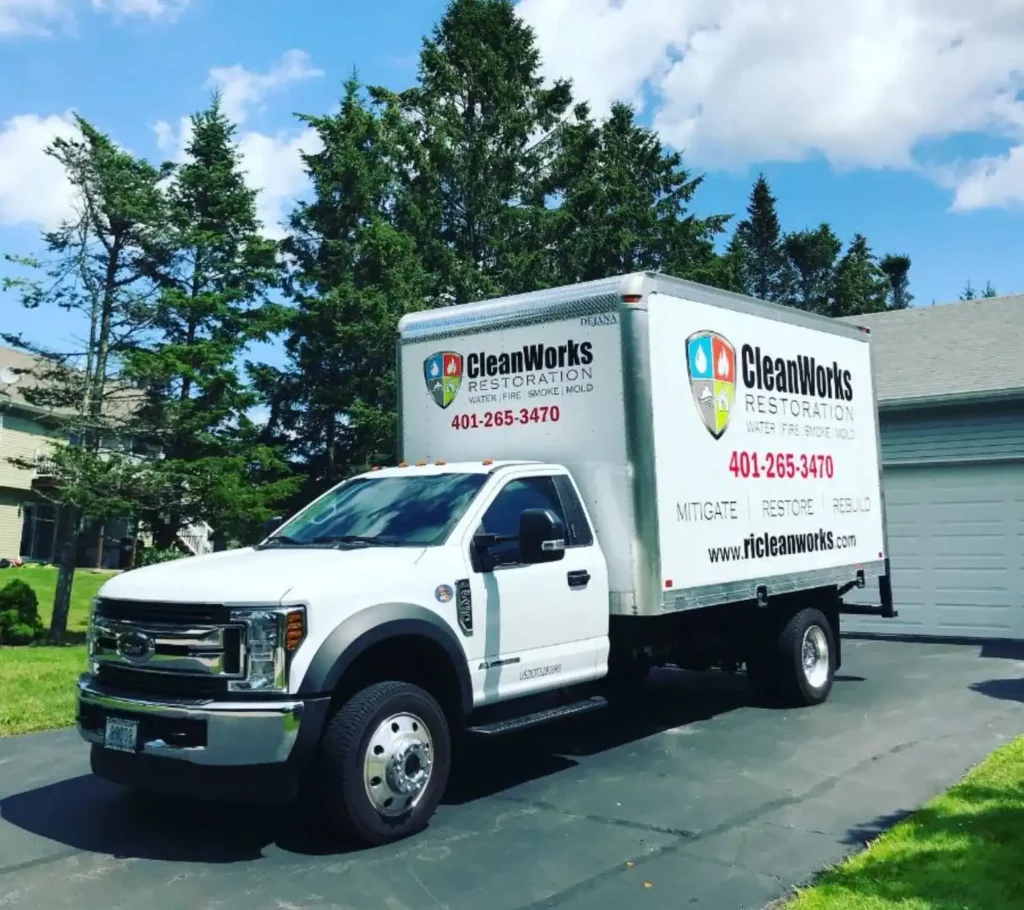
Why Choose Cleanworks for Your Home
Cleanworks is the best choice for helping your home in Rhode Island. We have many years of experience fixing water damage from broken pipes. Our team knows exactly what to do when disaster strikes your house. We are available to help you any time of the day or night. We use the best equipment to dry your home fast and safely. We treat your home like it is our own home. We want to get your life back to normal as soon as possible. You can trust us to do a great job every time.
Emergency Steps Before We Arrive
If you have a broken pipe, you need to call Cleanworks right away. While you wait for us, there are a few things you can do.
- Turn off the main water valve to stop the water flow.
- Turn off the electricity if the water is near any outlets.
- Move your valuable items to a dry place if you can.
- Do not walk into standing water because it might be dirty.
- Try to soak up some water with towels if it is safe.
- Stay calm and wait for our team to get there.
These steps help stop the damage from getting worse than it is. The faster you stop the water, the easier it is to fix. We will take over as soon as we get to your house.
Conclusion
Frozen pipes and broken pipes are a big worry for everyone in Rhode Island. The cold winter weather can cause damage that is hard to fix. But now you know what signs to look for and how to prevent them. If you do have a problem, you do not have to face it alone. Cleanworks is ready to help you clean up the mess and restore your home. We care about our neighbors and want you to be safe. Call us today if you need help with your pipes or water damage.