
Don’t Get Moldy: Your Sneaky Guide to Finding Hidden Fungi
Hidden mold detection is the process of finding mold growth that you can’t see with the naked eye—and it’s more urgent than most people realize.
Mold is a sneaky problem. It doesn’t need light to grow, and it is a master of hide-and-seek. It thrives in the dark, damp cavities of our homes, feasting on organic materials like the paper facing on drywall, wood studs, and carpet padding. It can spread behind walls, under floors, and inside your HVAC system for weeks or months before you ever see a single spot.
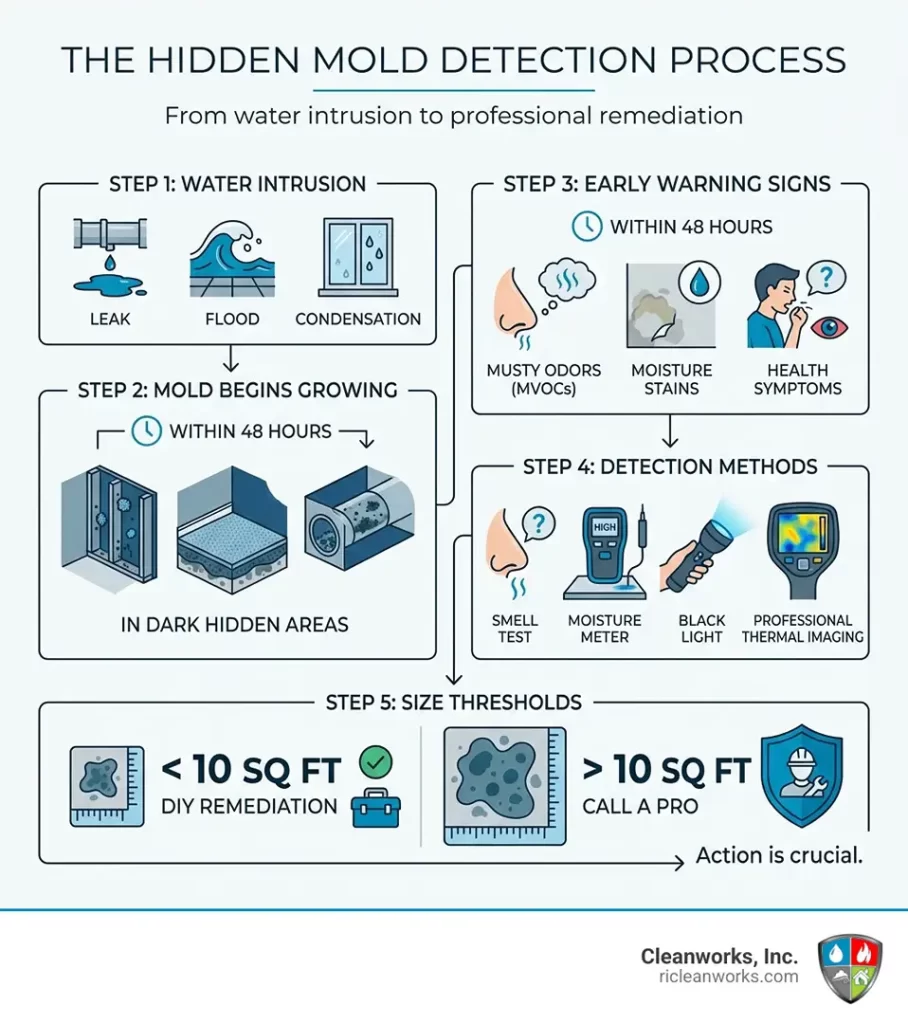
Here’s the part that catches most homeowners off guard: mold can start growing within just 48 hours of a water leak, flood, or burst pipe. By the time you notice a faint smell or a small stain, the problem may already be much bigger than it looks.
For homeowners and business owners in Rhode Island, Massachusetts, and Connecticut—where winter storms, spring flooding, and old housing stock are all common—hidden mold is a real and frequent threat.
This guide walks you through exactly how to find it, what to do about it, and when to call in the pros at Cleanworks.
The Invisible Threat: Sensory Signs of Hidden Mold
One of the most difficult concepts to grasp about mold contamination is that, many times, you simply cannot see it. In our experience serving areas from Lincoln, RI, to the shores of Newport and up into Southeastern Massachusetts, we’ve seen countless cases where a home looks pristine on the surface but harbors a massive colony just an inch behind the wallpaper.
The primary indicator of a hidden problem is often sensory.
1. The “Wet Sock” Smell
Have you noticed a persistent earthy, stale, or “wet sock” smell in a specific room? That isn’t just “old house smell.” It’s actually the release of Microbial Volatile Organic Compounds (MVOCs).
These are chemical vapors produced by mold as it grows and digests its food source. Because mold effectively “eats” the house it lives in, it releases these gases as a byproduct. If you smell it, the mold is likely there, even if you can’t see a spore.
2. Health Symptoms That Vanish Outdoors
Your body is often the best hidden mold detection tool you have. If you or your family members experience “seasonal allergies” that never seem to end, specifically when you are inside the house, it could be a reaction to hidden spores.
Watch for these symptoms that worsen indoors:
- Chronic coughing or sneezing
- Itchy, watery eyes
- Worsening asthma attacks
- Unexplained fatigue or headaches
The Litmus Test: If you leave your home for a few hours (or go on vacation) and these symptoms suddenly clear up, only to return when you walk back through the front door, you likely have an indoor air quality issue caused by hidden mold.
Visual Clues: Subtle Signs Your House is Hiding Something
While the mold colony itself might be hidden inside a wall cavity, it often leaves clues on the surface. You just have to know what to look for.
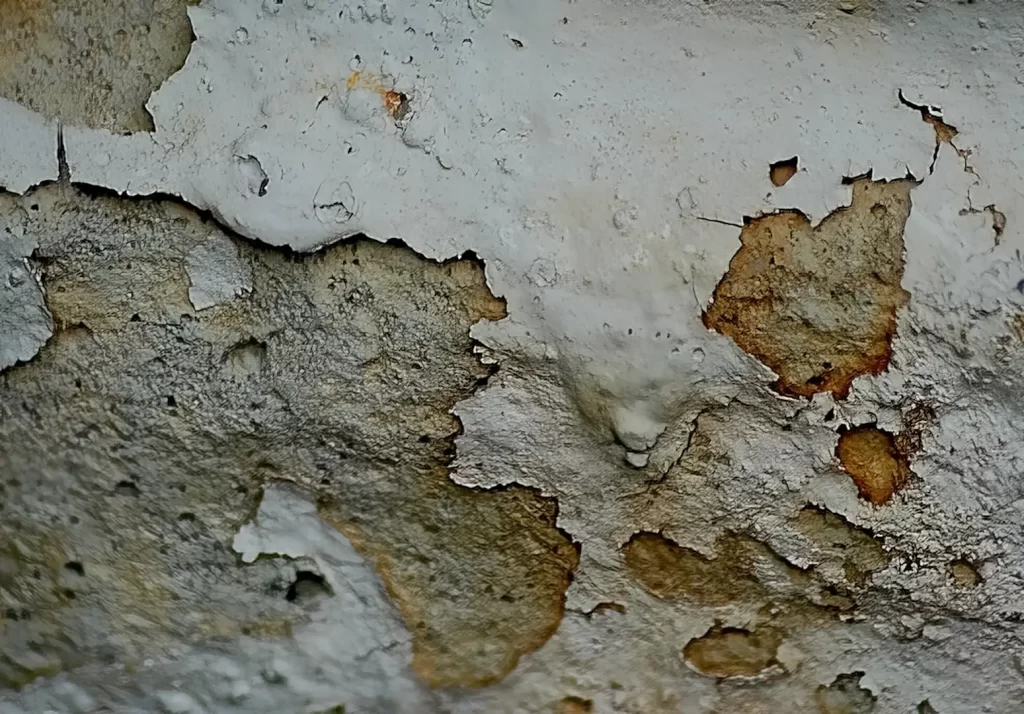
Peeling Paint and Bubbling Wallpaper
Moisture is the lifeblood of mold. When moisture gets trapped behind a wall (due to a leaky pipe or roof leak), it tries to escape. This pushes against paint and wallpaper.
- Wallpaper: If your wallpaper looks like it has bubbles or is peeling at the seams, there is moisture behind it. Mold loves the paper backing of wallpaper—it is an all-you-can-eat buffet for fungi.
- Paint: Paint that is cracking, peeling, or bubbling indicates the drywall underneath is damp.
Warped Walls or Baseboards
When wood and drywall absorb water, they expand. If you notice your baseboards aren’t sitting flush against the wall anymore, or if a wall looks bowed or warped, there is a significant moisture intrusion happening behind the scenes. Where there is that much water, mold is almost certainly following.
Discoloration
Look closely at your ceilings and walls. Do you see faint yellow, brown, or copper-colored rings? These are water stains. Even if the stain feels dry to the touch now, the spores that grew during the leak are likely still dormant and waiting for the next influx of humidity to reactivate.
Where Does Mold Hide? The Top Danger Zones
When performing a DIY hidden mold detection sweep, focus on these high-risk areas:
- Behind Drywall: This is the #1 hiding spot. Leaking pipes inside walls create a perfect humid terrarium for mold.
- Under Carpets: Spills that weren’t dried quickly enough, or moisture seeping up from a concrete slab, can get trapped in the carpet padding. The carpet on top may look clean, but the pad underneath could be black with mold.
- HVAC Systems: If mold grows inside your ductwork or on the AC coils, the system acts as a spore cannon, blowing contaminants into every room of your house whenever the heat or air turns on.
- Crawl Spaces: These areas are often poorly ventilated and damp. Mold grows here and the “stack effect” pulls the spores up into the main living areas of the home.
DIY Detection vs. Professional Inspection
If you suspect mold, you might be tempted to grab a hammer and open the wall. Stop!
Disturbing a hidden mold colony without proper containment can release millions of spores into the air, cross-contaminating your entire house and making the problem exponentially worse.
Safe DIY Steps:
- Use a Moisture Meter: You can buy a basic moisture meter at a hardware store. Hold it against the wall where you suspect a leak. If it registers high moisture content, you have found the fuel source for the mold.
- The Flashlight Test: Shine a bright flashlight parallel to the wall (raking light). This can reveal subtle bulging or warping that you can’t see under normal lighting.
When to Call Cleanworks (The 10 Sq. Ft. Rule)
The EPA suggests that if the moldy area is less than 10 square feet (roughly 3ft x 3ft), you may be able to handle it yourself. However, with hidden mold, you rarely know the true size of the infection until the wall is opened.
You should call a professional if:
- You smell mold but cannot find the source.
- There is a history of significant water damage (flooding, burst pipes).
- Family members are experiencing health issues.
- You discover a colony larger than 10 square feet.
Professional Thermal Imaging
At Cleanworks, we use advanced technology to see what your eyes can’t. Our professional thermal imaging cameras detect temperature differences in building materials. Since wet insulation and drywall are cooler than dry materials due to evaporation, these cameras allow us to map out the moisture pockets behind your walls without drilling a single hole.
Don’t Let Mold Linger
Hidden mold typically doesn’t go away on its own; it grows, spreads, and causes structural damage while degrading your indoor air quality.
If you are in Rhode Island, Southeastern Massachusetts, or Connecticut and suspect your home is harboring a secret fungal guest, don’t wait for the problem to surface.