
Why Drywall Water Damage Demands Your Immediate Attention
Drywall water damage is one of the most common—and dangerous—problems homeowners face. It often starts silently: a small stain on the ceiling or a slight musty smell in the basement. However, when water seeps into your walls or ceilings, the clock starts ticking immediately.
Within 24 to 48 hours, mold can begin growing behind your drywall, creating serious health risks and structural problems that only get worse (and more expensive) with time.
At Cleanworks, we’ve seen how quickly a minor leak can turn into a major restoration project. Whether you are in Rhode Island, Southeastern Massachusetts, or Eastern Connecticut, understanding what is happening behind your paint is critical to saving your home.
Why Drywall Water Damage Demands Immediate Attention
To understand the urgency, you have to understand the material itself. Drywall is essentially a gypsum core sandwiched between thick paper layers.
When water touches drywall, the paper backing begins to degrade almost immediately. The gypsum core then acts like a sponge, pulling moisture upward through capillary action. This means water can travel several inches—sometimes feet—above the visible waterline.
Because of this porous composition, you are often dealing with significantly more damage than meets the eye. The visible stain is often just the “tip of the iceberg.”

The Top 5 Warning Signs of Drywall Water Damage
How do you know if your walls are compromised? Use this quick assessment guide to spot the issues before they destroy your structural integrity.
1. Discoloration and Stains
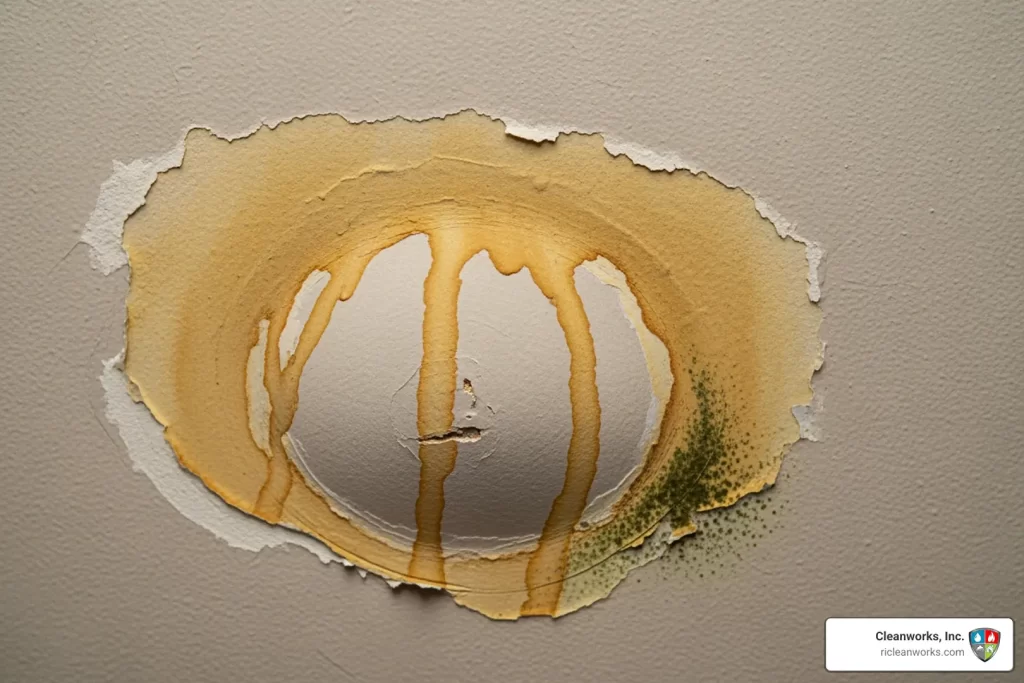
This is usually the first red flag. Look for yellow, brown, or copper-colored patches on your walls or ceilings. These “water rings” indicate that water has penetrated the surface and is evaporating, leaving mineral deposits behind.
2. Soft or Spongy Texture
If you press against the drywall and it yields, feels mushy, or leaves an indentation, the core has absorbed too much water. This signals that the structural integrity is compromised and the panel likely needs replacement.
3. Peeling Paint or Bubbling Wallpaper
When moisture gets trapped behind wall finishes, it breaks the bond between the paint/wallpaper and the drywall. If you see bubbling, blistering, or peeling, do not just scrape it off and paint over it—there is moisture trapped beneath that needs to be addressed.
4. Warping, Swelling, or Sagging
This is a sign of severe saturation. Ceilings may sag under the weight of wet insulation and drywall (which becomes extremely heavy when wet). Wall panels may bow outward or pull away from the studs/fasteners. This is a safety hazard requiring immediate action.
5. Musty Odors (The Invisible Sign)
Sometimes you smell the damage before you see it. A persistent, earthy, or musty odor is a strong indicator of hidden mold growth behind the walls.
First Steps: Finding the Source
You cannot fix drywall water damage until you stop the water. Repairing the wall without stopping the leak is a temporary fix at best—and a waste of money. Common culprits in our New England communities include:
- Plumbing & Appliance Leaks: Burst pipes, slow drips from loose fixtures, or faulty hoses on washing machines and dishwashers.
- Roof & Foundation Issues: Damaged shingles from winter storms, compromised flashing, or foundation cracks that allow rainwater to seep into attics and basements.
- High Humidity: Poor ventilation in bathrooms or basements can cause condensation. Over time, the drywall absorbs this airborne moisture, creating a breeding ground for mold.
The Big Decision: Repair vs. Replace
When to Repair (Dry & Patch)
You might be able to save the drywall if:
- The water source was clean (e.g., a broken water supply line, not a sewage backup).
- The water was caught quickly (within 12–24 hours).
- The drywall is still firm to the touch.
- The area affected is small/minor.
The Fix: Thoroughly dry the area with high-velocity fans and dehumidifiers. Once the moisture content is normal, prime the stain with an oil-based primer (to prevent bleed-through) and repaint.
When to Replace (Cut & Remove)
You generally need to remove and replace the drywall if:
- Mold is visible: Never just paint over mold. The porous gypsum holds mold spores deep inside where surface cleaners can’t reach.
- The wall is soft: If the gypsum has turned to mush, it cannot be hardened again.
- It’s gray or black water: If the water came from a sewage backup, floodwater, or a washing machine drain, the drywall is contaminated and must be removed for health safety.
- The wall is insulated: Wet insulation behind drywall rarely dries out fast enough to prevent mold. Usually, the wall must be opened to replace the insulation.
When to Call the Professionals
While a small, dry water stain might be a DIY weekend project, significant drywall water damage requires professional equipment. Household fans simply cannot generate the airflow needed to dry out the space behind the walls before mold takes hold.
If you are dealing with sagging ceilings, extensive flooding, or the smell of mold, don’t wait.
Contact Cleanworks today. We serve Rhode Island, Southeastern Massachusetts, and Eastern Connecticut with professional restoration services to ensure your home is dry, safe, and restored to its original beauty.
Need help assessing your water damage? Visit ricleanworks.com/contact to schedule an inspection.