Last updated: —
Musty odors, visible mold growth, or recent water damage — Cleanworks provides IICRC-certified mold remediation with proper containment, HEPA removal, antimicrobial treatment, and full reconstruction.
East Providence sits along the eastern shore of the Providence River and features a mix of waterfront neighborhoods, mid-century residential streets, and post-industrial properties. Proximity to tidal water raises ambient humidity year-round, and crawl spaces and basements throughout Rumford, Riverside, and Watchemoket are vulnerable to moisture infiltration and subsequent mold growth. Many older homes in the city also have original fiberglass-free insulation that retains moisture and promotes hidden mold colonization.
This page explains the mold remediation process, what to look for, how insurance coverage works, and why professional IICRC-certified remediation is always preferable to DIY approaches. Cleanworks, Inc. serves East Providence 24/7 as a full-service mold remediation and licensed general contracting company following IICRC S520 protocols.
Mold is almost always caused by a moisture source — whether that's an active or past water damage event, chronic condensation, or inadequate vapor control in crawl spaces and attics. If mold resulted from a water loss or fire, fire damage restoration may also be part of your recovery.
Mold is often hidden behind walls, in attic insulation, or beneath flooring. These are the key indicators that professional assessment is needed:
A persistent earthy or musty smell — especially in basements, crawl spaces, or after recent water damage — is a strong indicator of active mold growth, even if nothing is visible.
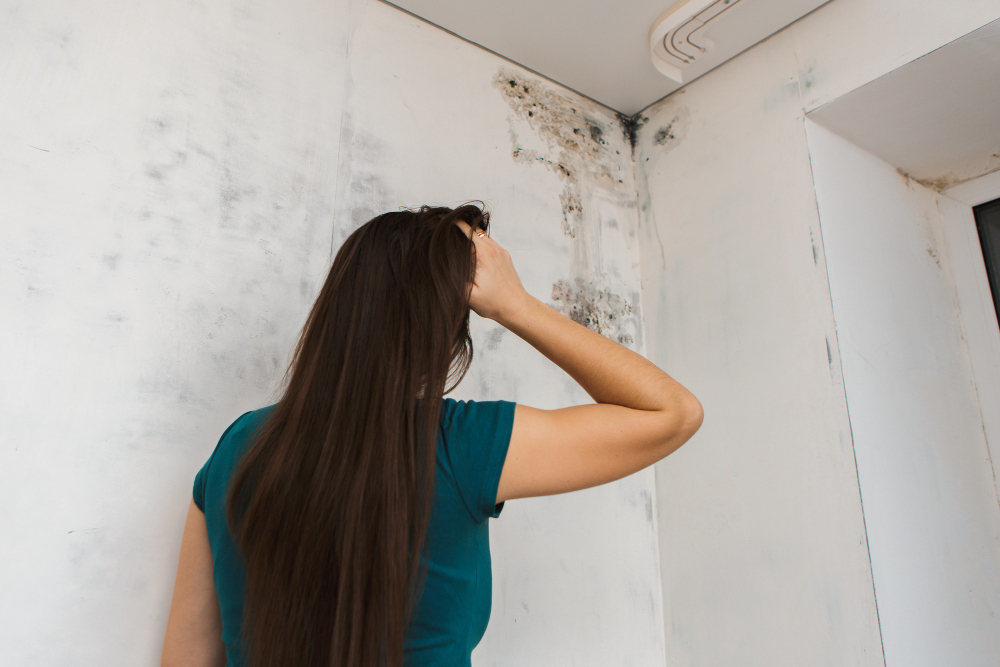
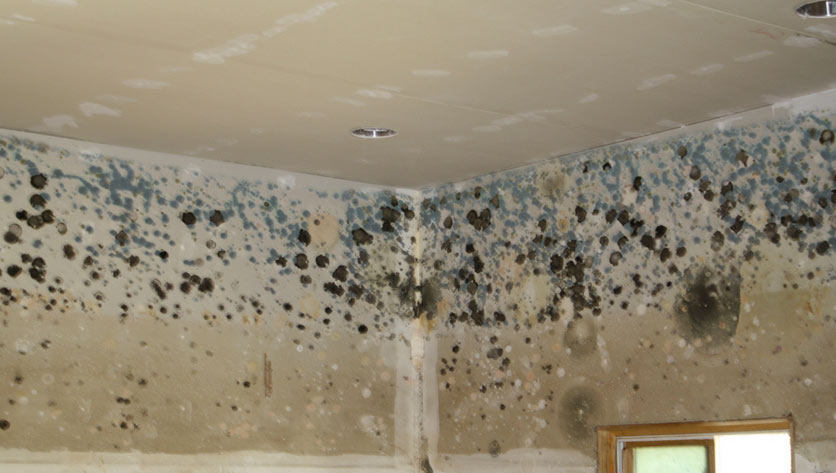
Dark spots, fuzzy growth, or discoloration on walls, ceilings, grout, wood framing, or insulation. Visible mold is typically only a fraction of total growth — the remainder is hidden.
Any water event that wasn't fully dried within 24–48 hours creates conditions for mold colonization in drywall, insulation, and wood framing — even without visible signs.
Respiratory irritation, coughing, sneezing, or worsening allergy symptoms that improve when away from the property are common indicators of mold-affected indoor air quality.
Chronic condensation on windows, pipes, or walls indicates high indoor humidity — the fuel that sustains mold growth. Condensation often precedes visible mold by weeks or months.
Crawl spaces without proper vapor barriers are among the most common sources of mold in Rhode Island homes. Ground moisture evaporates into the crawl space and colonizes floor joists and insulation year-round.
Every Cleanworks mold remediation follows the IICRC S520 standard from assessment through clearance testing:
We inspect all affected areas, identify the moisture source driving mold growth, and document everything with photographs and moisture meter readings. Mold cannot be permanently remediated without correcting the moisture source first.
When mold follows a covered water loss, we prepare a complete Xactimate scope of loss — the same software your adjuster uses — covering all remediation and reconstruction costs. We contact your adjuster directly to begin the claims process.
Polyethylene barriers seal the work area and HEPA-filtered air scrubbers establish negative air pressure — preventing mold spores from migrating to unaffected areas of your home during remediation. This is the most critical step for preventing cross-contamination.
All affected surfaces are HEPA-vacuumed to capture loose spores. Non-salvageable materials — drywall, insulation, wood — are carefully removed and bagged for proper disposal per Rhode Island Department of Environmental Management guidelines.
All exposed structural surfaces are treated with EPA-registered antimicrobial agents to eliminate remaining mold colonies and inhibit future growth. Treatment covers surfaces that were in contact with affected materials, not just visibly moldy areas.
HEPA air scrubbers run continuously throughout and after remediation, filtering spores from the air until clearance testing confirms acceptable levels. Structural drying equipment addresses any residual moisture.
Post-remediation air quality testing confirms that mold spore levels in affected areas are within acceptable limits before containment is removed. This is the final confirmation that remediation is complete and effective.
As a licensed Rhode Island general contractor, Cleanworks rebuilds everything that was removed — drywall, insulation, flooring, paint. All permits pulled through the City of East Providence Building Department. One contractor, start to finish.
IICRC-trained technicians equipped with HEPA vacuums, air scrubbers, polyethylene containment barriers, EPA-registered antimicrobials, and moisture mapping equipment. When Cleanworks arrives, containment is established before any mold is disturbed.
Browse documentation from recent mold remediation and restoration projects completed by Cleanworks across Rhode Island.
When mold results from a covered water loss, your homeowners policy typically covers both remediation and reconstruction. Cleanworks handles all documentation.
As an experienced insurance restoration contractor, we prepare all scopes of loss in Xactimate — covering both remediation and reconstruction — and coordinate directly with your insurance company from first call through final payment.
Every Cleanworks mold remediation follows the IICRC S520 standard — the industry's highest protocol for mold remediation. Proper containment, HEPA vacuuming, antimicrobial treatment, and clearance testing.
We establish polyethylene containment barriers and negative air pressure before disturbing any mold — preventing spore migration to unaffected areas during remediation.
Licensed in RI, MA, and CT for full reconstruction — we replace everything we remove: drywall, insulation, flooring, paint. No hand-offs to a separate contractor.
We prepare Xactimate documentation, coordinate with your adjuster, and bill your insurer directly — minimizing out-of-pocket costs and paperwork for you.
Based in Lincoln, RI, Cleanworks has served Rhode Island homeowners for decades. We know the local building stock, climate conditions, and moisture challenges specific to Providence County.
One call covers the complete scope: assessment, containment, HEPA removal, antimicrobial treatment, air scrubbing, clearance testing, and complete reconstruction.
Once remediation is complete and clearance testing confirms acceptable mold levels, the rebuild begins. As a licensed Rhode Island general contractor, Cleanworks manages all trades — so you never need to coordinate a separate contractor for repairs.
All reconstruction work is permitted through the City of East Providence Building Department. Cleanworks pulls all permits, manages all inspections, and ensures compliance with current Rhode Island State Building Code.
Rumford contains a number of Colonial and early Federal-period homes where mold remediation must be handled with attention to original plaster, lath, and structural timber. Cleanworks adjusts scope to preserve historic materials wherever structurally sound.
Cleanworks responds to mold calls throughout all of East Providence:
Cleanworks serves all 39 Rhode Island municipalities. Select your town:
Answers to common questions about mold remediation and restoration in Rhode Island.
Mold rarely occurs without an underlying moisture source. Cleanworks handles all three services under one contract.
Mold is almost always preceded by water damage. Cleanworks handles extraction, structural drying, and mold prevention — stopping mold before it starts or addressing both in one project.
Firefighting water saturates structures and causes mold growth within 24–48 hours if not properly dried. Cleanworks handles fire, smoke, water, and mold under one contract.