
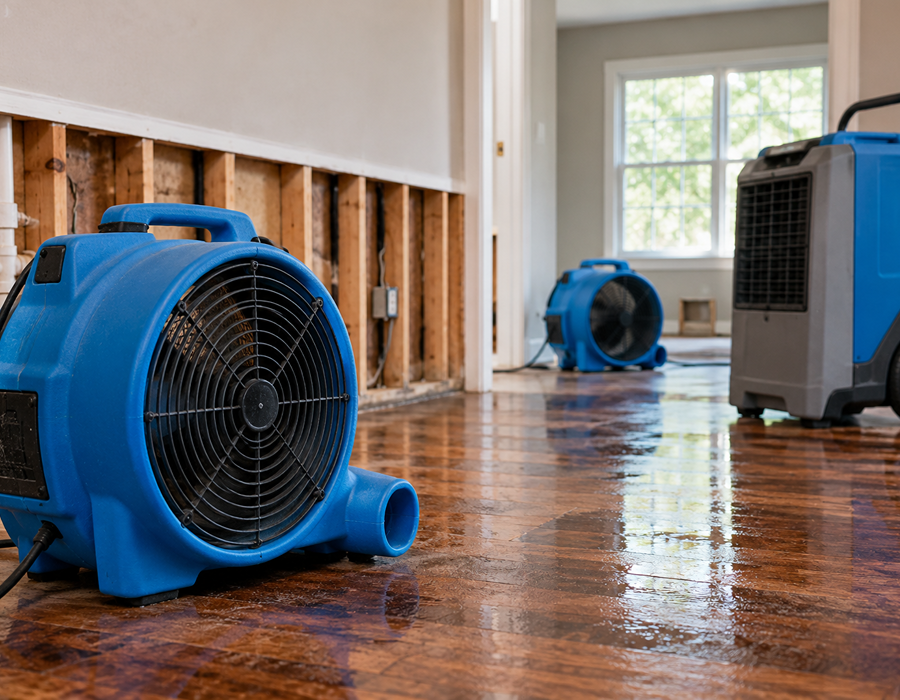
Structural drying after water damage removes moisture that is trapped inside floors, walls, wood, and other parts of a building. Even after standing water is gone, building materials can stay wet for days if they are not dried the right way.
This is why water extraction is only the first part of the restoration process. Professional drying helps protect the property from more damage and prepares the space for repairs.
If your home or business has water damage, acting quickly can make a big difference. Even small water leaks can lead to larger problems when moisture is left behind.
What Is Structural Drying?
Structural drying is the process of removing excess moisture from a building after a leak, flood, burst pipe, or other water emergency.
Water can soak into materials that may look dry from the outside. Drywall, flooring, wood framing, cabinets, and insulation may all hold moisture below the surface.
The goal is to find those wet areas and dry them before repairs begin.
Dealing with water damage in Rhode Island? Contact Cleanworks for professional water damage cleanup and restoration.
Step 1: Remove Standing Water
The first step is getting as much water out of the property as possible. Pumps, water extractors, and other equipment may be used depending on how much water is present.
Removing the visible water makes the drying process faster. It also gives the restoration team a better look at which areas of the property were affected.
Homeowners should act quickly after flooding because the first 48 hours after water damage can be important for limiting additional problems.
Step 2: Find Hidden Moisture
A room can look dry while water is still trapped behind the walls or under the flooring. Restoration professionals check the affected area to find moisture that may not be easy to see.
Common areas that can stay wet include:
- Drywall
- Subflooring
- Wood framing
- Carpet padding
- Cabinets
- Insulation
- Baseboards and trim
Wet drywall can be especially difficult to spot. Learn more about what happens when drywall gets water damaged and when it may need to be removed.
Step 3: Start the Drying Process
Once the wet areas are identified, drying equipment can be placed throughout the property.
Air movers help increase airflow around wet surfaces. Dehumidifiers help pull moisture from the air. Together, these tools help moisture leave the building materials and move out of the affected space.
The equipment may need to run for several days depending on the amount of water and the materials involved.
Think your home is dry just because the water is gone? Cleanworks can inspect the damage and help determine what still needs to be dried.
Step 4: Monitor Moisture Levels
Structural drying is not simply placing fans in a room and hoping for the best. Moisture levels need to be checked as the drying process continues.
Different materials dry at different speeds. Wood may hold water longer than other surfaces, while moisture trapped underneath flooring can take time to remove.
Monitoring helps the restoration team know when an area is actually dry and when equipment can safely be removed.
Why Proper Drying Matters
Moisture left inside a building can cause flooring to warp, drywall to weaken, wood to swell, and odors to develop. It can also create conditions where mold may grow.
That does not mean every water-damage problem will cause mold, but quick drying lowers the amount of time moisture remains inside the property. You can learn more about how quickly mold can begin growing after water damage.
Professional drying is about handling the damage you can see and the moisture you cannot.
What Happens After Everything Is Dry?
Once the affected areas reach proper moisture levels, the property can move into the repair stage.
Depending on the damage, repairs may include replacing drywall, flooring, insulation, trim, paint, or other damaged materials. Larger losses may require more extensive reconstruction.
Water damage can also involve an insurance claim. If you are unsure how that process works, Cleanworks explains insurance restoration in Rhode Island and what homeowners can expect.
Get Help With Water Damage in Rhode Island
Structural drying is one of the most important parts of water damage restoration. Removing standing water is not enough if moisture is still trapped inside your home.
Cleanworks helps Rhode Island homeowners and businesses clean up water damage, dry affected areas, and move toward repairs. If you are dealing with a flood, leak, burst pipe, or other water emergency, getting professional help early can prevent the problem from becoming larger.
Contact Cleanworks today for water damage restoration in Rhode Island.
Frequently Asked Questions
How long does structural drying take after water damage?
Structural drying often takes several days, but every property is different. The amount of water, type of materials, temperature, airflow, and location of the moisture can all affect drying time.
Can I dry water damage with household fans?
Fans may help with very small surface moisture, but they may not reach water trapped under floors or inside walls. Larger water-damage problems should be inspected so hidden moisture can be found and properly dried.