
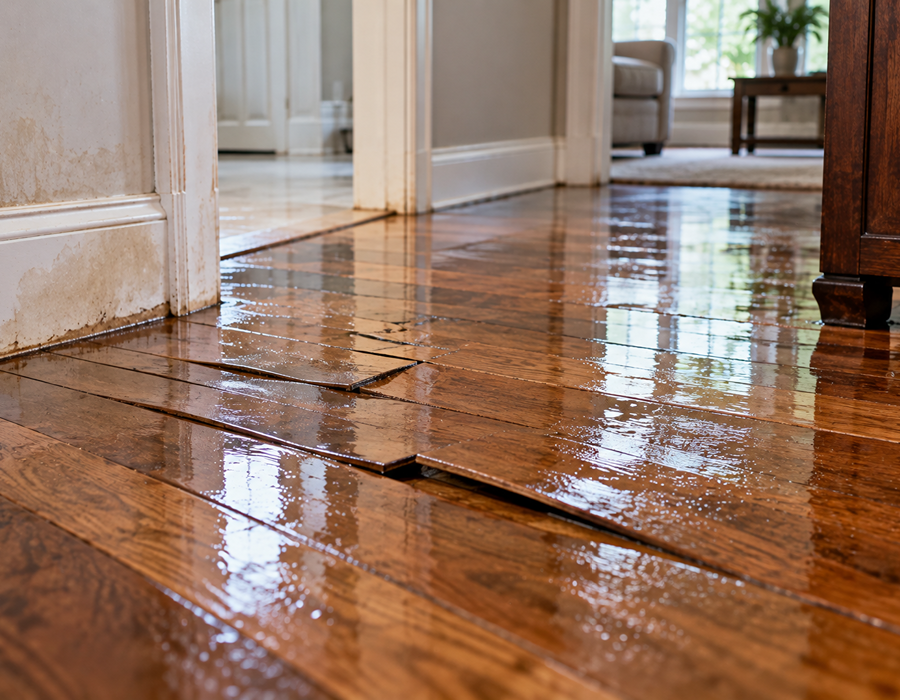
Yes, hardwood floors can sometimes be saved after water damage, especially when the water is removed quickly. The outcome depends on how long the floor was wet, where the water came from, and how deeply it soaked into the wood.
Hardwood can look dry on top while moisture remains underneath. That is why professional water extraction and structural drying can make a big difference after a leak, flood, or broken pipe.
If you find water on your hardwood floors, contact Cleanworks for water damage restoration in Rhode Island before the damage has more time to spread.
What Does Water Do to Hardwood Flooring?
Wood naturally absorbs moisture. When hardwood gets wet, the boards can expand as they take in water.
You may notice changes such as:
- Raised edges
- Gaps between boards
- Dark stains
- Buckling
- Warped boards
- A damp or musty smell
Even a small plumbing problem can cause damage over time. Learn why you should not ignore minor water leaks in your home.
How Quickly Should Wet Hardwood Floors Be Dried?
The sooner you address wet hardwood, the better. Water can move between the boards and reach the subfloor underneath.
Simply wiping up the surface does not tell you whether the floor is dry below. Professional restoration crews can check moisture levels and determine how far the water has traveled.
If your hardwood floor is wet after a leak or flood, call Cleanworks for professional water extraction and drying.
Does Wet Hardwood Always Need to Be Replaced?
No. Some hardwood flooring can be dried instead of replaced.
Whether the floor can be saved depends on the condition of the wood, the amount of water, and how long it remained wet. The source of the water also matters because clean water from a supply line is different from contaminated water.
A restoration professional can inspect the floor before deciding whether drying or replacement is the better option.
What Happens When Water Gets Under Hardwood Floors?
Water underneath hardwood is often the bigger concern. Moisture can become trapped between the hardwood and subfloor where normal household fans may not reach it.
Signs of moisture below the surface can include:
- Boards beginning to lift
- Soft areas in the floor
- New gaps or uneven boards
- Staining near walls
- Damp odors
Hidden moisture can also affect nearby drywall and trim. Our guide to drywall water damage explains what can happen when water spreads into walls.
Can You Dry Hardwood Floors Without Removing Them?
Sometimes. Professional drying equipment may be able to remove moisture without tearing out the entire floor.
Air movement and dehumidification can help pull moisture from wet building materials. Moisture levels should also be monitored during the process instead of relying only on how the floor looks or feels.
The right approach depends on the type of flooring and how much water reached the area.
What Happens If Hardwood Stays Wet Too Long?
Waiting can make a repair more difficult. Wood may continue to swell, warp, stain, or separate as moisture remains trapped inside it.
Moist conditions can also create an environment where mold may develop. Learn more about how quickly mold can start growing after water damage.
Quick action does not guarantee that every floor can be saved, but it gives the restoration team more options.
What If the Flooring Cannot Be Saved?
Sometimes the damage is too severe and part or all of the flooring needs to be removed. The wet materials underneath must then be addressed before new flooring is installed.
Larger water losses may also damage drywall, cabinets, insulation, or other parts of the room. In these cases, restoration can move from cleanup and drying into repairs and reconstruction.
If the damage is part of an insurance claim, you can also learn how insurance restoration works in Rhode Island.
Protect Your Hardwood Floors After Water Damage
A wet hardwood floor does not automatically mean you need a new floor. Acting quickly and properly drying the affected materials may help save flooring that would otherwise become more severely damaged.
Cleanworks provides water damage restoration for Rhode Island homes and businesses, from water removal and structural drying through necessary repairs and reconstruction.
Have water spreading across your hardwood floors? Contact Cleanworks for 24/7 water damage restoration in Rhode Island.
Frequently Asked Questions
How do I know if there is water underneath my hardwood floor?
Buckling, raised edges, staining, soft areas, and damp odors can be signs of moisture below the floor. Moisture testing can help determine whether water is still trapped underneath even when the surface looks dry.
Should I replace hardwood flooring immediately after a flood?
Not always. Some hardwood floors can be professionally dried and saved depending on the water source, amount of damage, and how quickly drying begins. The floor should be inspected before deciding whether replacement is necessary.